Few artists have shaped the trajectory of text in contemporary art as profoundly as Mel Bochner and Ed Ruscha. Emerging from different coasts, different sensibilities, and different artistic lineages, the two artists converge around a central proposition: that language itself - our most familiar system of communication - can be dismantled, reimagined, and transformed into material, image, and experience. The artworks highlighted here, including Ruscha’s Wall Rocket, Sponge Puddle, Bliss Bucket, History Kids, Woman on Fire, and The End, alongside Bochner’s Money, Head Honcho, Blah Blah Blah, and Amazing, reveal how each artist has uniquely shaped the vocabulary of contemporary art and the market that surrounds it.
Ed Ruscha: The Poet of the American Landscape
Ed Ruscha, a central figure of West Coast Pop, is known for fusing the language of mass culture with the expansiveness of the American landscape. His iconic word-on-image compositions transform text into something sculptural and atmospheric, suspended within cinematic environments of sky, light, and horizon.
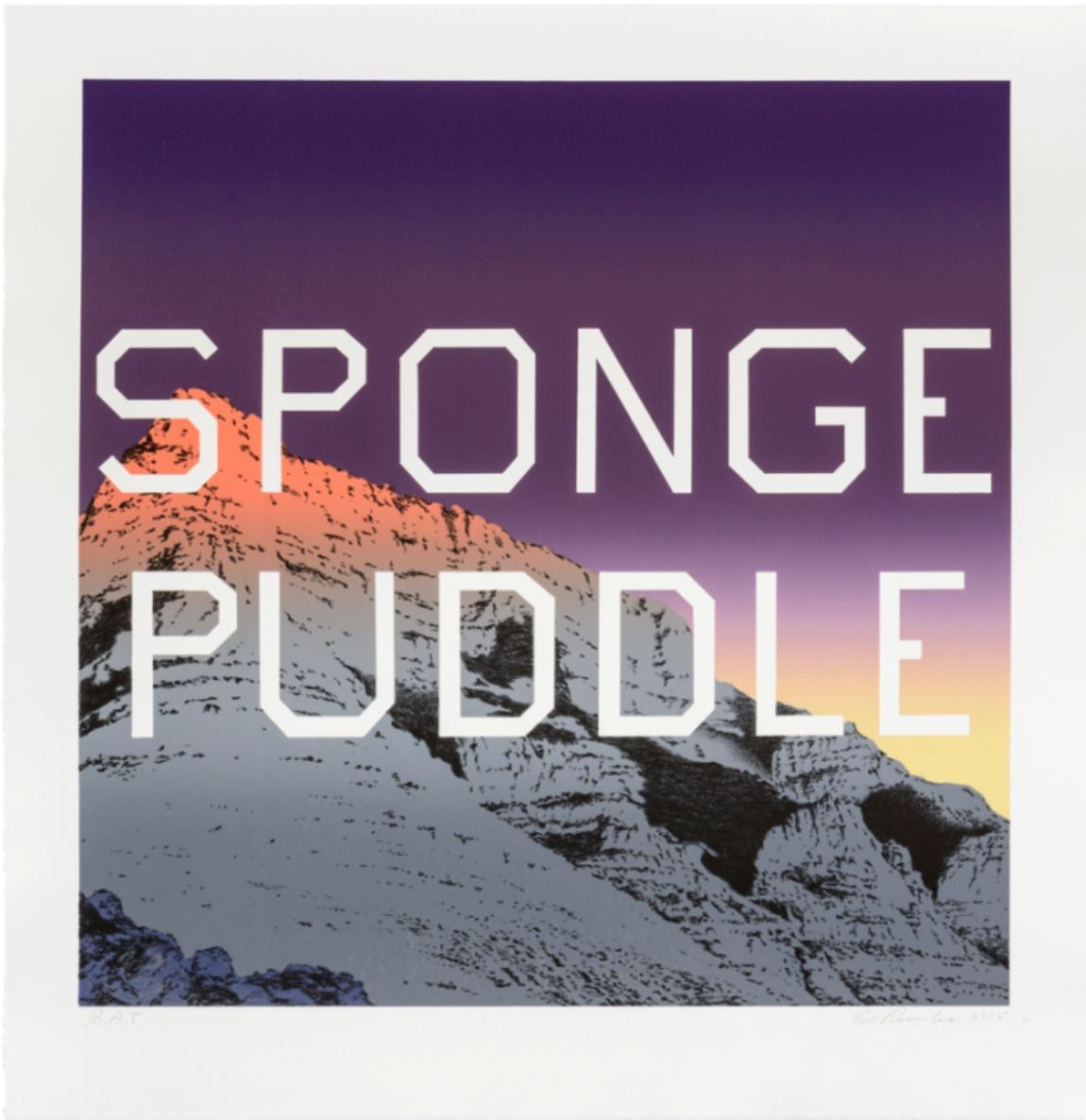
In works such as “Wall Rocket,” “Bliss Bucket,” “Sponge Puddle,” and “History Kids,” Ruscha overlays crisp, stenciled typography onto stylized mountain ranges. These are not simply landscapes; they are psychological terrains. Ruscha’s invented phrases function like fragments of overheard dialogue - cryptic, humorous, poetic, and open-ended. The precision of the lettering, often reminiscent of industrial signage or military stencils, clashes playfully with the sublime natural settings, creating tension between the mechanical and the spiritual.
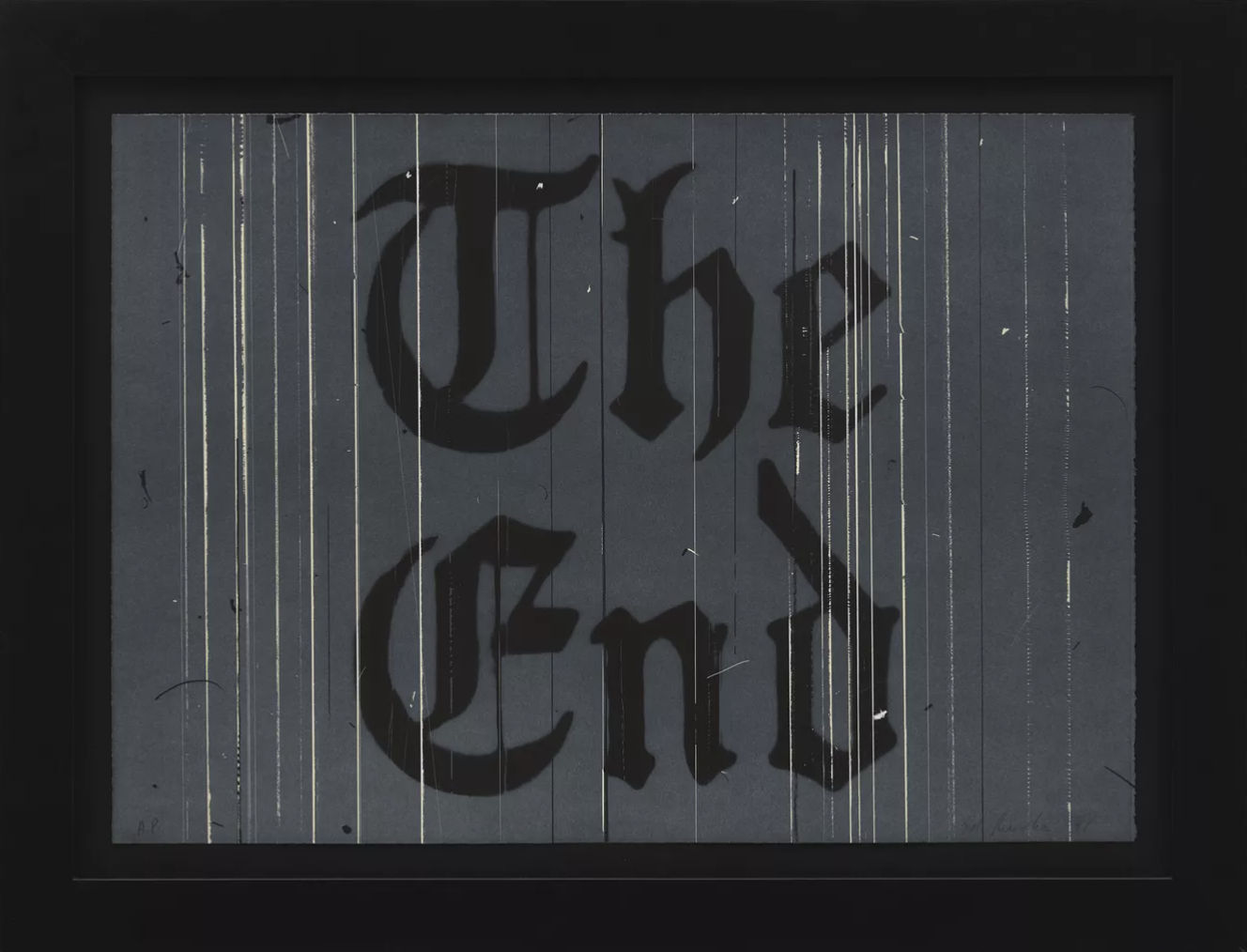
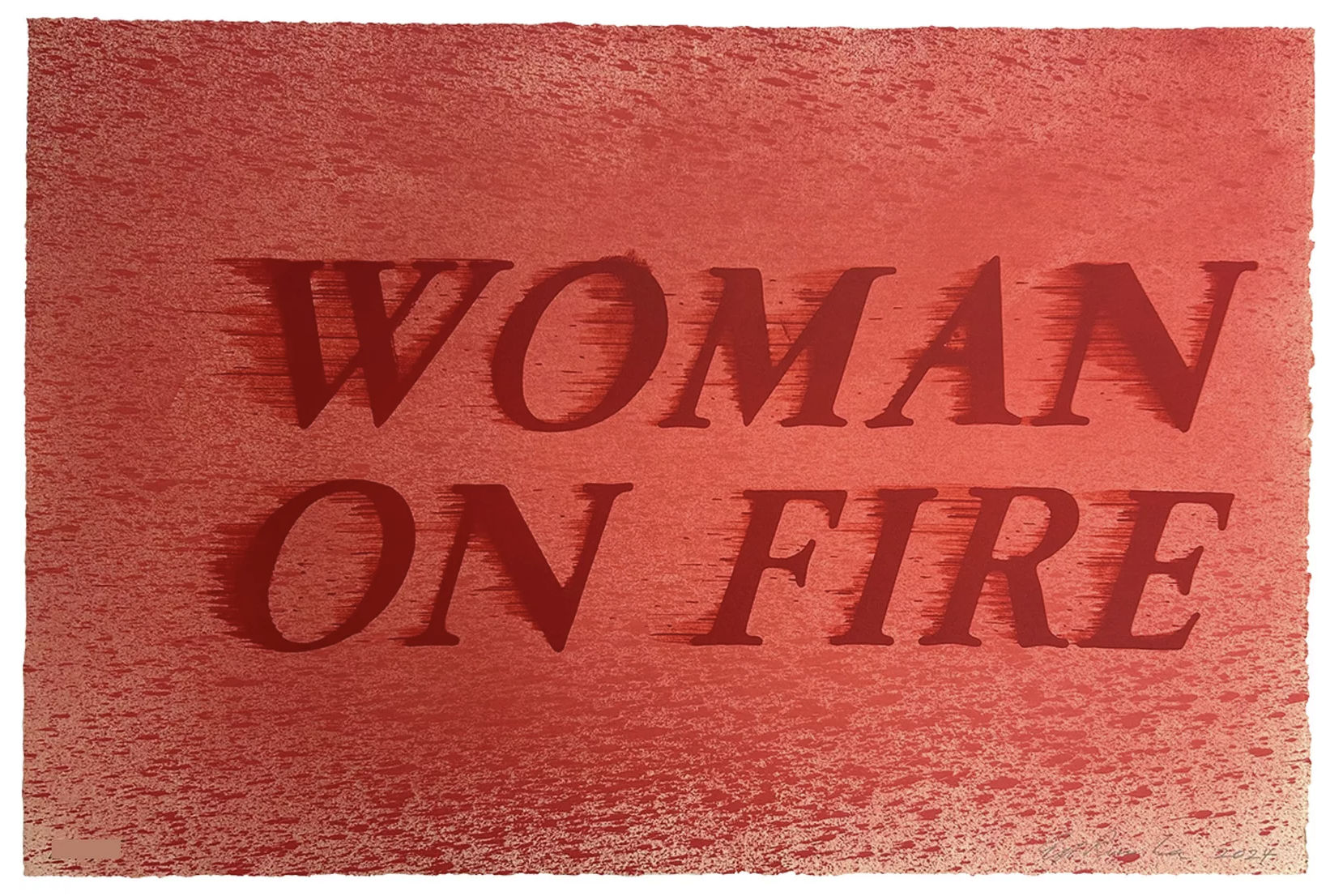
His work “Woman on Fire” represents another key dimension of his practice. Here, the text is embedded in thick red pigment, evoking heat, urgency, and emotional combustion. And in “The End,” Ruscha dips into cinematic nostalgia, referencing vintage film reels with scratches, monochrome fields, and Gothic typography. The result is an elegy to Hollywood’s fading illusions, a reminder that every spectacle - visual or verbal - eventually dissolves.
Ruscha’s influence is profound. He established a new visual grammar for art that merges:
-
Pop art’s immediacy
-
Conceptual art’s rigor
-
The West Coast’s luminous, cinematic atmosphere
His works are fixtures in major museums worldwide, including MoMA, Tate, and the Whitney. Market demand has remained exceptionally strong for decades, with both prints and paintings achieving significant results. Ruscha’s ability to translate language into landscape—and landscape into metaphor—has made him one of the most enduring figures of postwar American art.
Mel Bochner: The Philosopher of Language and Success
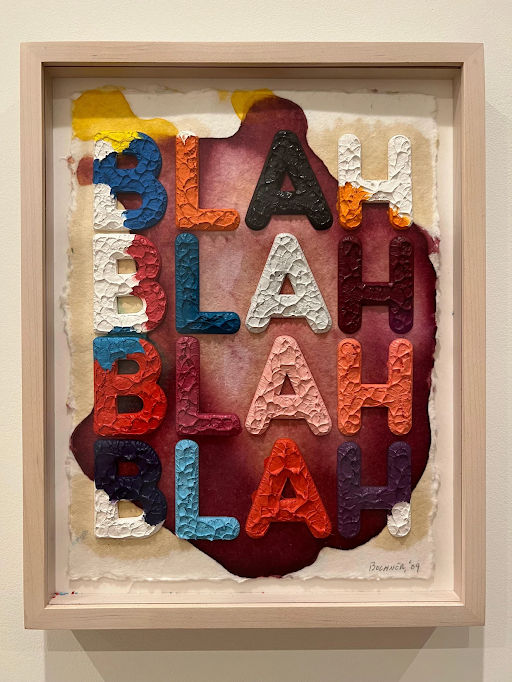
While Ruscha treats words like objects drifting through open space, Mel Bochner treats them like matter - thick, physical, excessive, and erupting with meaning. A seminal figure in Conceptual Art, Bochner has spent more than fifty years interrogating the structures of language, measurement, and perception.
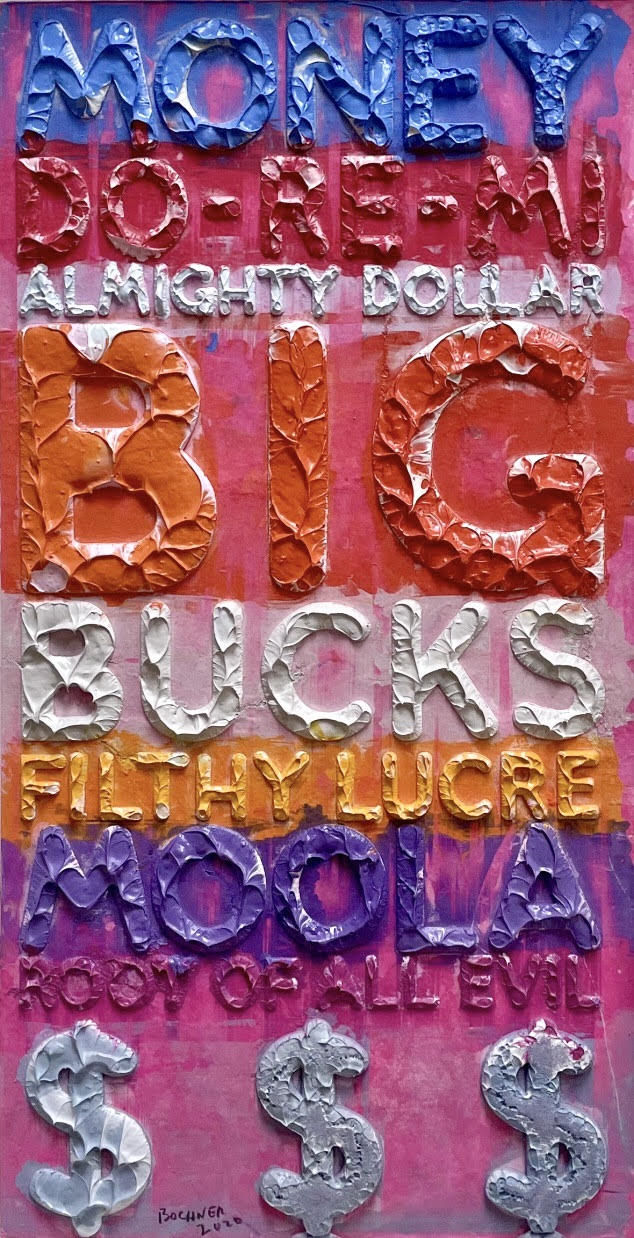
In works such as “Amazing,” “Blah Blah Blah,” “Head Honcho,” and “Money,” Bochner builds words out of layers of oil paint, resin, and pigment so dense they verge on relief sculpture. His letters swell, drip, ooze, and shift in color. They are joyful and messy, loud and irreverent. Where Ruscha’s words feel distilled, Bochner’s feel overflowing.
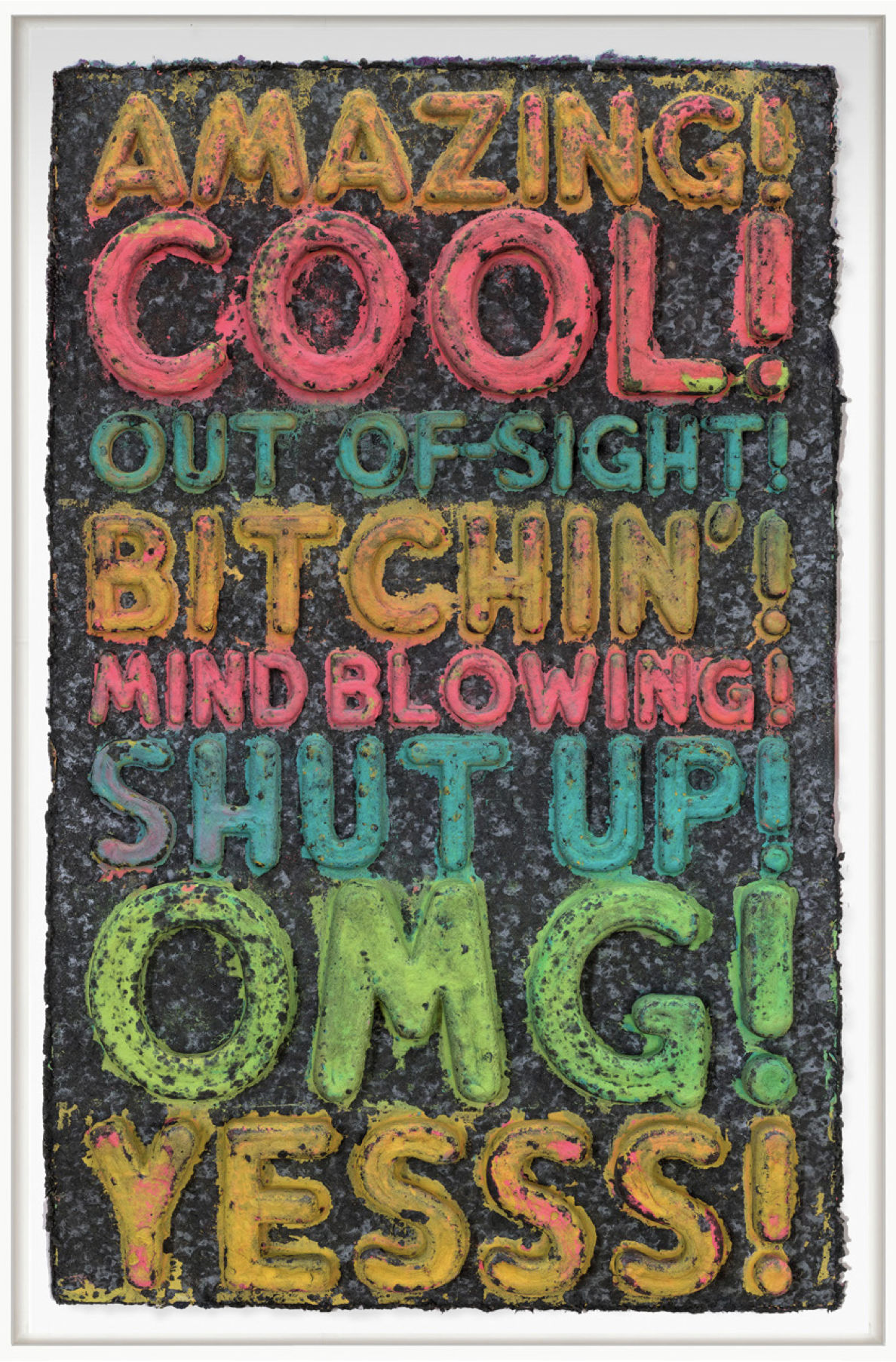
Bochner’s linguistic choices are equally intentional. He often draws from the American vernacular—slang, idioms, clichés—exposing the absurdity and volatility within everyday expressions. In Blah Blah Blah, language collapses into noise. In Head Honcho and Amazing, power and hyperbole become comedic. In Money, he riffs on the various names we give currency - “do-re-mi,” “big bucks,” “moola” - revealing how language shapes our perception of value.
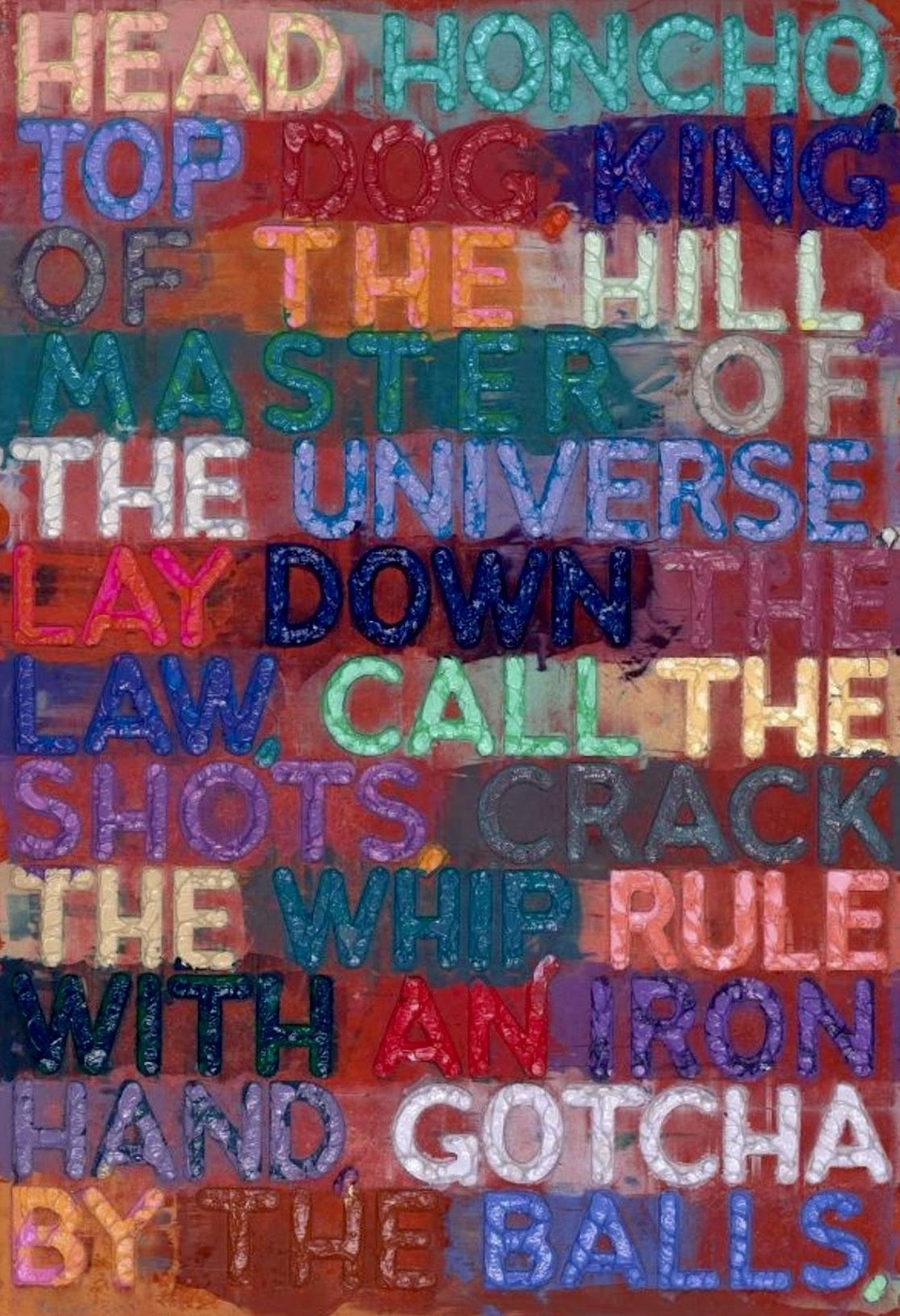
Bochner was a foundational voice in the birth of Conceptual Art, helping to define practices that placed ideas above objects. His later text-based works, however, introduced a new dimension to his oeuvre - one that merges conceptual thought with lush materiality.
In the market, Bochner has seen sustained growth, driven by:
-
Collectors drawn to his visually striking surfaces
-
Museums expanding their conceptual art holdings
-
Renewed interest in artists whose practices bridge words and images
His works are widely collected and continue to resonate with audiences seeking sharp wit, bold color, and intellectual depth.
Two Approaches to Language:
Though Ruscha and Bochner both work with text, their aesthetic impulses and conceptual frameworks diverge in illuminating ways.
1. Tone & Sensibility
-
Ruscha speaks softly - his words hover like haiku.
-
Bochner speaks loudly - his words shout, stutter, multiply.
2. Materiality
-
Ruscha: smooth, cool, atmospheric surfaces.
-
Bochner: thick, tactile, expressive surfaces bordering on sculpture.
3. Relationship to Pop Culture
-
Ruscha references mass culture through typography, signage, and cinematic tropes.
-
Bochner references conversational language, clichés, and the emotional charge of slang.
4. Philosophical Approach
-
Ruscha: language as poetic interruption.
-
Bochner: language as system, structure, and breakdown.
This contrast reveals why both artists are considered essential: they map the emotional, cultural, and conceptual range of American linguistic experience.
Together, Ruscha and Bochner shaped the use of text in contemporary art more than any other living artists. Ruscha fused Pop's interest in everyday languagr with a uniquely Western visual sensibility, influencing artists from Bruce Nauman to Raymond Pettibon. Bochner helped establish the foundation of Conceptual Art, redefining what an artwork could be - an idea, a measurement, a linguistic game.
Their work paved the way for artists such as Barbara Kruger, Jenny Holzer, Christopher Wool, Glenn Ligon, and many others who explore the tensions between words and images, meaning and misunderstanding.
Both artists are considered blue-chip mainstays, but for different reasons.
Ed Ruscha has long-term stable demand, a strong museum presence, as well as auction records that affirm his global stature, and iconic imagery that is immediately recognizable in the market. Mel Bochner is a celebrated conceptual pioneer, with a market expanding through renewed institutional attention. His highly desirable text works with bold color and graphic impact performs strongly in both primary and secondary markets.
Collectors gravitate to Ruscha for his cool, distilled poetry - and to Bochner for his exuberance, intellect, and material richness. Both offer the rare combination of art-historical significance, visual immediacy, and investment value.
Two Voices - One Legacy
Mel Bochner and Ed Ruscha occupy distinct yet parallel positions in the evolution of contemporary American art. Their works show how language can be a landscape, a sculpture, a joke, a warning, or a mirror. Together, they have expanded the possibilities of text as a visual medium and shaped generations of artists and collectors.
The artworks presented - Ruscha’s mountain-word compositions and cinematic texts, Bochner’s thickly painted vernacular explosions - prove that language is never neutral. It is emotional, cultural, performative, and endlessly elastic. Through their divergent methodologies, Bochner and Ruscha remind us that words are not simply vehicles for meaning - they are living materials, capable of beauty, humor, critique, and extraordinary power.