
When Christopher Wool released Black Book in 1989, he was not yet the blue-chip figure whose name would come to dominate contemporary painting. But the book - slim, monochromatic, and unassuming - would soon prove to be one of the most important publications of late 20th-century art. Containing seventeen crisp reproductions of his now-iconic text paintings, Black Book distilled Wool’s conceptual rigor and graphic intensity into a single, editioned object. Today, it stands as the primary document of his most influential period: the moment when his language-based paintings reshaped the visual and intellectual landscape of American art.
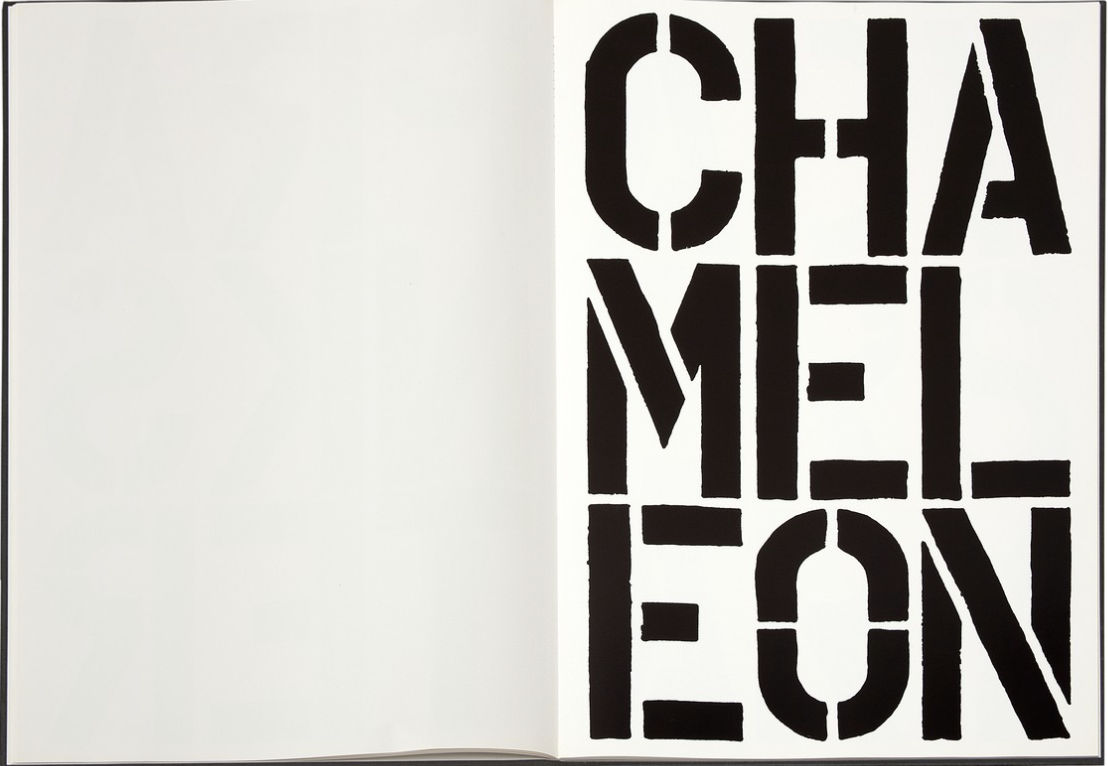
By the late 1980s, New York’s downtown art scene was in the midst of a profound shift. The raw expressiveness of Neo-Expressionism had begun to fade, and a new generation of artists was interrogating the nature of images, signs, and the mechanics of communication itself. Wool emerged as a central voice in this moment. Working with industrial stencils - originally intended for signage rather than studio use - he applied black, block-letter words directly onto white surfaces, stripping away ornamentation until only language and its failings remained.

Black Book captures this moment with precision. Each of its seventeen plates reproduces a text painting that exemplifies Wool’s most recognizable vocabulary: broken word fragments, compressed spacing, and bold typographic forms that oscillate between legibility and obstruction. The book is not merely a catalog - it is an articulation of a visual language that was, in 1989, still startlingly new.
The works included in Black Book form a cohesive narrative about Wool’s early conceptual investigations. In its fragmentation, Wool reveals the instability of language and the distance between reading and seeing.
Wool’s breakthrough lay in his recognition that words, once stripped of their syntactic comfort, could behave like images - visual matter subject to rhythm, composition, and disruption. The paintings reproduced in Black Book demonstrate how dramatically he expanded the field of text-based art. They are minimal yet emotional, conceptual yet visceral, evoking everything from punk aesthetics to bureaucratic signage to the disorienting experience of city life.
From the moment of its release, Black Book stood apart as more than an artist’s publication. It offered collectors and institutions a rare opportunity to acquire a complete and cohesive survey of Wool’s early text works at a moment when his style was crystallizing. Several factors contribute to its enduring importance:
1. It documents the origin of Wool’s most iconic visual system.
Before the large-scale canvases became auction sensations, Black Book provided the authoritative record of his word paintings - works that would become some of the most recognizable images in contemporary art.
2. It exists as a unified conceptual artwork.
The book is not supplementary; it is part of Wool’s oeuvre. Its format - a clean sequence of pages, each containing a single reproduced painting - mirrors the formal austerity and serial logic of his practice.
3. It intersects with art history in a profound way.
Black Book continues the tradition of Ed Ruscha’s artist’s books and Minimalist publications of the 1960s, while pushing the text-based approach into a sharper, more confrontational visual terrain.
4. Its rarity has driven significant collector demand.
Produced in a limited edition of 350, Black Book has become increasingly scarce on the secondary market. As Wool’s career ascended, the book transformed from a niche artist’s object into a highly coveted artifact of contemporary art history.
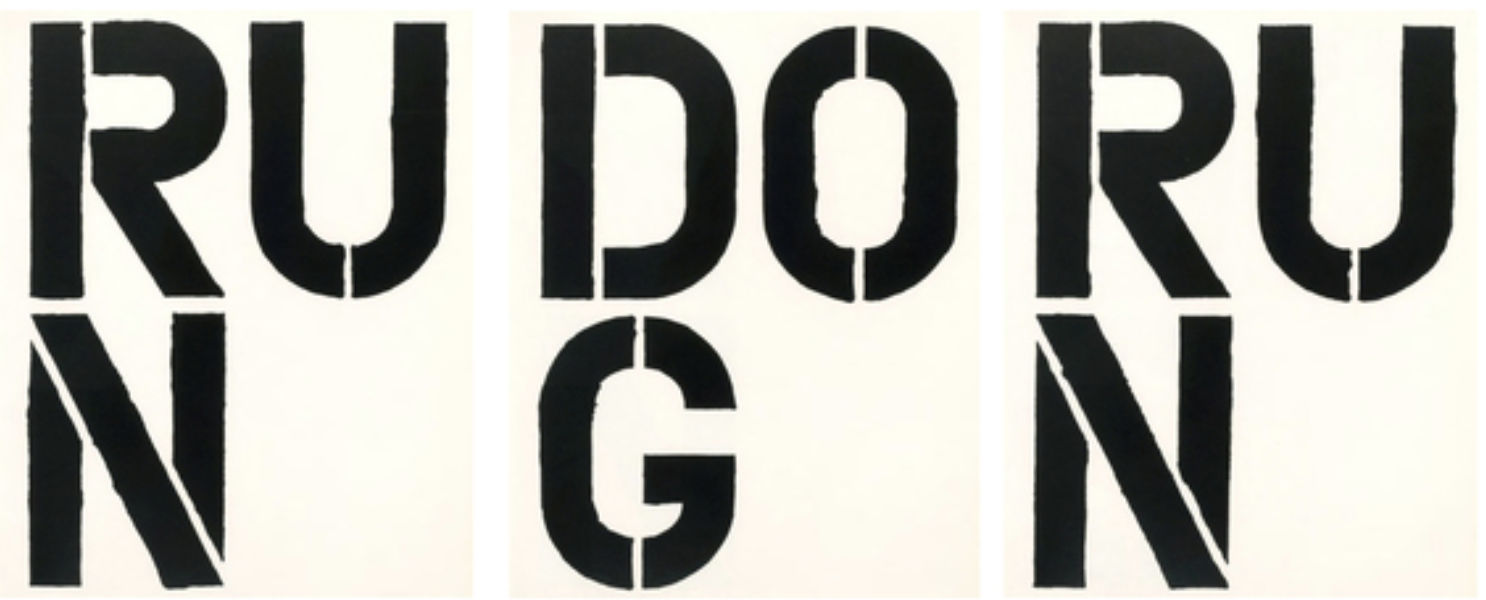
Over the decades, Christopher Wool has shifted into silkscreens, erasures, abstractions, and gestural mark-making - but the text paintings remain the backbone of his legacy. Museums and collectors continue to regard them as the most essential and definitive works of his output. As a result, Black Book retains a singular authority: it is the origin story, the archive, and the conceptual anchor that encases Wool’s foundational ideas in their purest form.
In an era defined by fractured communication, media overload, and the collapse of clarity, Wool’s early text paintings feel uncannily prescient. Black Book embodies that prescience, providing a snapshot of an artist who understood - far earlier than most - that language could both reveal and obscure, connect and disorient.
Today, Black Book occupies a rare place in the canon of artist’s books. It is not simply a compilation of images; it is an artwork that encapsulates an era, a sensibility, and a tectonic shift in contemporary painting. For collectors, it offers an irreplaceable window into the moment Wool’s artistic identity crystallized. For institutions, it serves as essential documentary evidence. And for anyone seeking to understand the evolution of text in visual art, Black Book remains required reading.
In its restraint, severity, and conceptual clarity, Christopher Wool’s Black Book stands as one of the most significant artist’s publications of the last half-century - an object whose influence continues to reverberate across the contemporary art landscape.
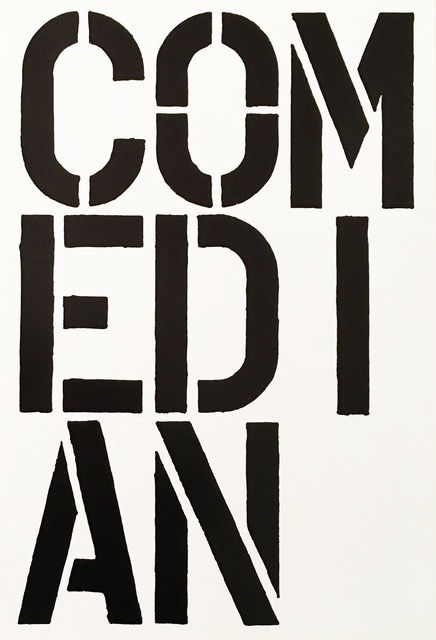
The Power of Compressed Language
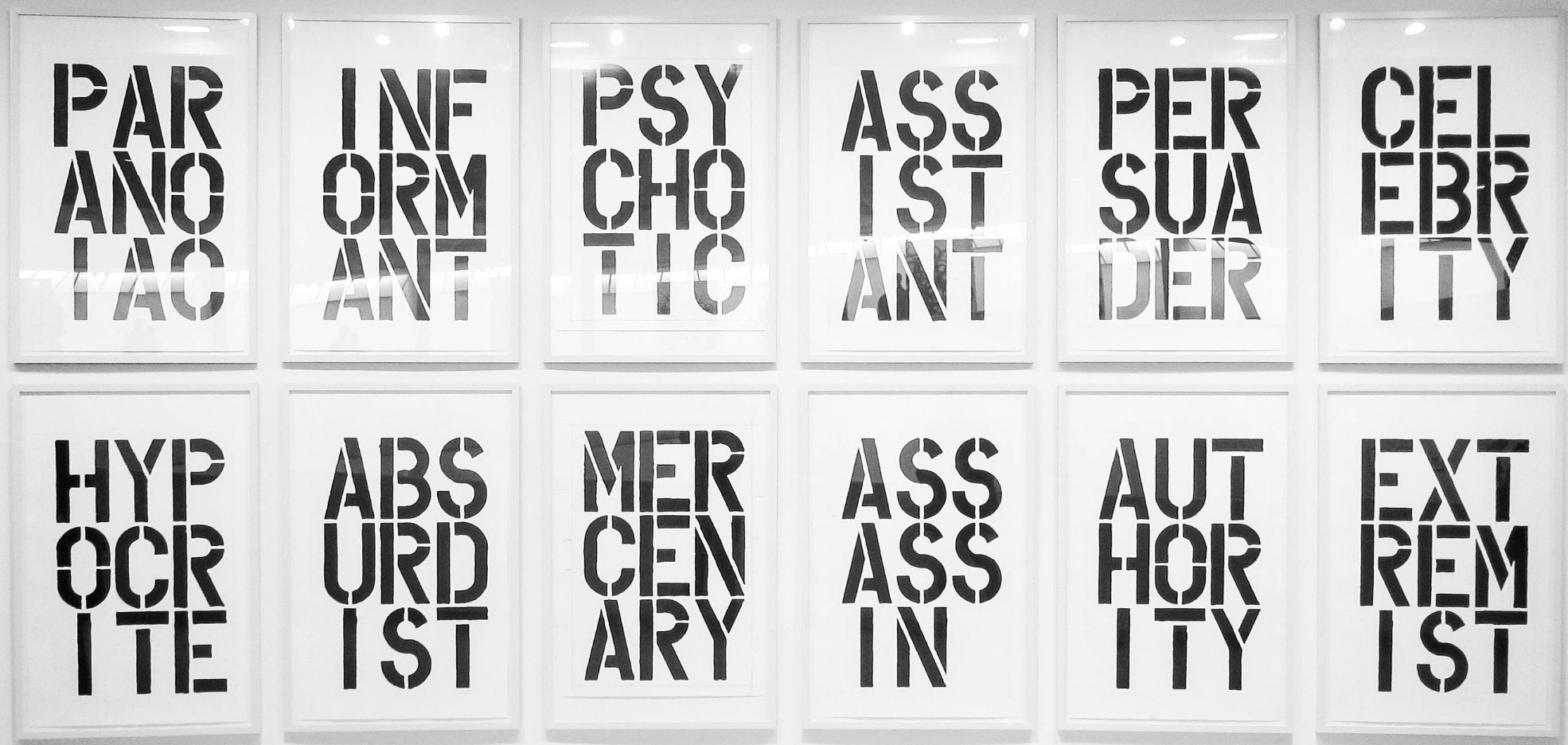
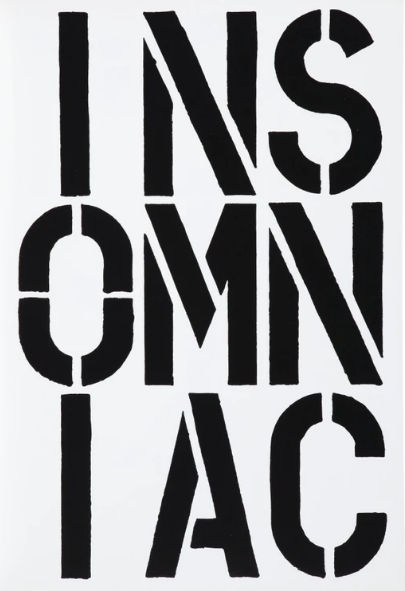
Among the most compelling works associated with Black Book are Christopher Wool’s one-word text pieces - paintings and editioned prints featuring single, charged terms such as ASSASSIN, CELEBRITY, CHAMELEON, HYPOCRITE, INSOMNIAC, and others. These works distill Wool’s linguistic strategy to its most potent form. By isolating a single word in stark, black stenciled letters and breaking it across the grid of the picture plane, he strips language of its fluidity and turns it into something sculptural, confrontational, and ambiguous.
In these one-word compositions, Wool deprives the viewer of context. The words hover between noun, identity, accusation, descriptor, and psychological state. “ASSASSIN” might denote violence, politics, role-play, or internal turmoil. “CELEBRITY” oscillates between glamour, emptiness, and critique. By fracturing these words across abrupt line breaks - ASSA / SSIN, CELE / BRITY - Wool forces the viewer to navigate the tension between reading and deciphering. The familiar becomes foreign; meaning becomes unstable.
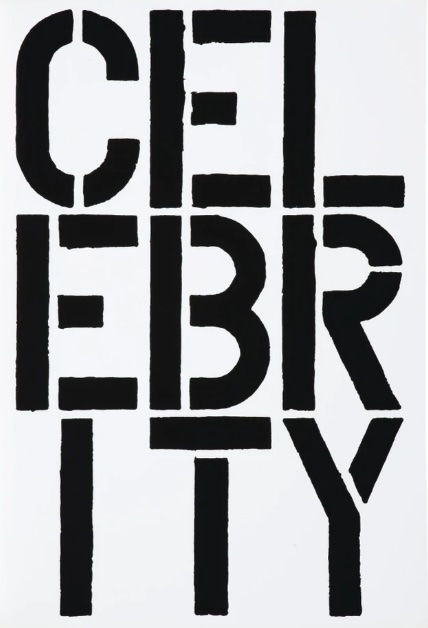
Why the One-Word Prints Matter
These one-word works are essential to understanding Wool’s breakthrough in the late 1980s. They demonstrate how he weaponized minimalism, typography, and urban grit to interrogate language as both visual structure and cultural symbol. Each single word acts as a psychological trigger - loaded with implication yet emptied of certainty. The fragmentation transforms the word into a visual object, severed from traditional meaning.
In the context of Black Book, the one-word prints serve a crucial role. While multi-word works like Apocalypse Now create narrative undertones, the single-word pieces offer a purer, more distilled version of Wool’s linguistic philosophy. They show how one word - carefully chosen, brutally arranged - can carry as much emotional and conceptual weight as an entire phrase. For collectors, these works embody the crispest expression of Wool’s iconic style.
Because the one-word pieces reflect the tightest synthesis of Wool’s graphic style and conceptual strategy, they have become highly sought after in the market. They are instantly recognizable, visually aggressive, and historically significant. Their clarity, rarity, and art-historical importance make them some of the most desirable Black Book–related works for collectors.
