
Gerhard Richter occupies a unique position in the history of post-war art, not simply because his paintings command extraordinary market attention, but because his practice fundamentally reshaped how images are understood, produced, and consumed in the contemporary era. Born in Dresden in 1932 and trained under the dogmatic regime of Socialist Realism before escaping to West Germany in 1961, Richter’s life and work are inseparable from the ideological fissures that defined Europe in the mid-twentieth century. His art grapples with the profound instability of representation—how images mediate memory, shape perception, and simultaneously obscure and fabricate truth.
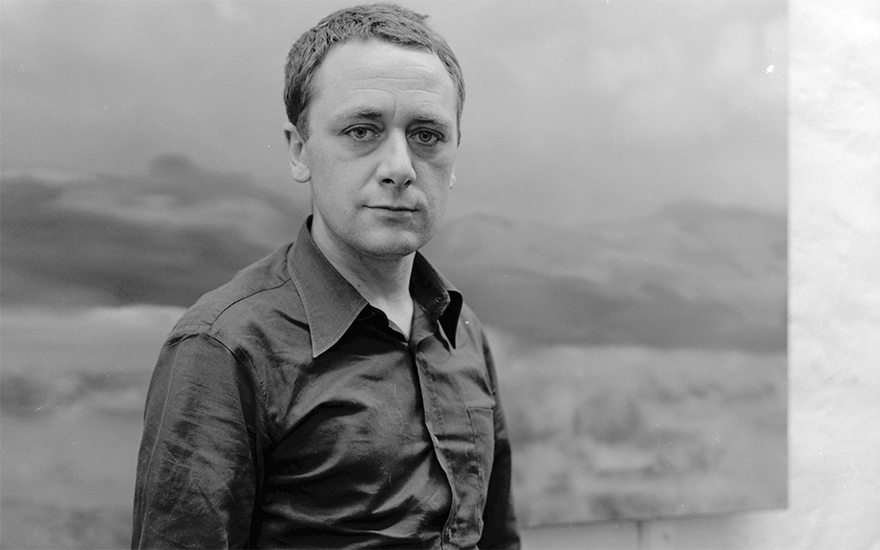
Richter’s career encompasses a remarkable range of styles: from blurred photo-paintings and forensic portraits to sublime abstractions, colour charts, squeegee works, glass objects, and photographic multiples. Rather than treat this stylistic plurality as contradiction, Richter approached each shift as a form of research, interrogating the boundaries between painting and photography, chance and intention, realism and skepticism. His practice stands at the crossroads of Pop Art, Minimalism, Conceptual Art, Photorealism, and Abstract Expressionism, yet remains fundamentally resistant to classification, driven instead by a deep philosophical commitment to ambiguity and doubt.
Within this expansive oeuvre, prints and editioned works occupy a central, if often misunderstood, role. For Richter, printmaking was not a commercial afterthought but a laboratory for ideas: a means of exploring reproducibility, mechanical mediation, and the erosion of image authority. Many of his prints directly parallel his pivotal series in painting, yet introduce technical and conceptual nuances that make them independent contributions to his practice. As a result, Richter’s editions are of particular interest to collectors seeking works that are historically grounded, intellectually rich, and financially accessible relative to his paintings.
Today, the market for Richter prints reflects the stature of his wider practice. Early editioned works, produced during his conceptual breakthrough in the 1960s and 1970s, are scarce and increasingly valued for their intellectual significance. Later and contemporary multiples offer entry points for collectors seeking to engage with the artist’s ideas without committing to the high seven-figure sums commanded by his major canvases. Across this spectrum, Richter prints represent a rare convergence of aesthetic rigour, conceptual depth, and market credibility.
This collecting guide provides an in-depth overview of Richter’s life and artistic development, the role of prints within his broader practice, the most significant series and edition types to know, current market valuations, and practical strategies for collectors navigating this field. It aims to equip both new and experienced collectors with a nuanced understanding of what makes Richter’s printed works compelling—not only as acquisitions, but as intellectual artefacts within one of the most important artistic legacies of the late twentieth and early twenty-first centuries.
I. Life, Context, and Artistic Significance
Gerhard Richter was born in Dresden in 1932, in the turbulent final years of the Weimar Republic, and grew up under a succession of political regimes that weaponised imagery, ideology, and representation. Dresden’s destruction during World War II and the subsequent imposition of socialist cultural doctrine formed a visual and intellectual backdrop that would influence Richter’s artistic skepticism throughout his career. After the war, he trained at the Dresden Hochschule für Bildende Künste between 1951 and 1956, where Socialist Realism was not merely a stylistic choice but a civic obligation. His early training, therefore, was deeply rooted in rendering the visible world in a technically precise manner, all while serving ideological clarity.
This experience gave Richter two things: a mastery of representational technique, and a lifelong suspicion of the image’s claim to truth. Art, for him, became inseparable from doubt, memory, and the politics of seeing.
In 1961, sensing the tightening ideological borders of East Germany, Richter escaped to the West and arrived in Düsseldorf shortly before the Berlin Wall was erected. He entered a radically different artistic ecosystem: one shaped by existential exhaustion, the rejection of modernist heroics, and the commercial saturation of post-war capitalism. At the Kunstakademie Düsseldorf, Richter encountered artists such as Sigmar Polke, Konrad Lueg, and Manfred Kuttner, with whom he formed the loose movement known as Capitalist Realism.
Rather than replicate American Pop’s indulgence in celebrity and commodity aesthetics, Capitalist Realism appropriated the banal visual language of consumer culture to expose its absurdity. Richter used photography precisely because it was viewed as objective, neutral, and authoritative—and then undermined that neutrality through blur, fragmentation, displacement, and seriality.
Richter’s early “photo-paintings,” which translated found images into blurred, monochrome canvases, positioned photography as a site of epistemological instability. These works avoided the emotional subjectivity associated with Abstract Expressionism and the anti-visual dogmatism of Conceptual Art. In doing so, Richter articulated a third path: an art of uncertainty, contingent perception, and the unstable archive.
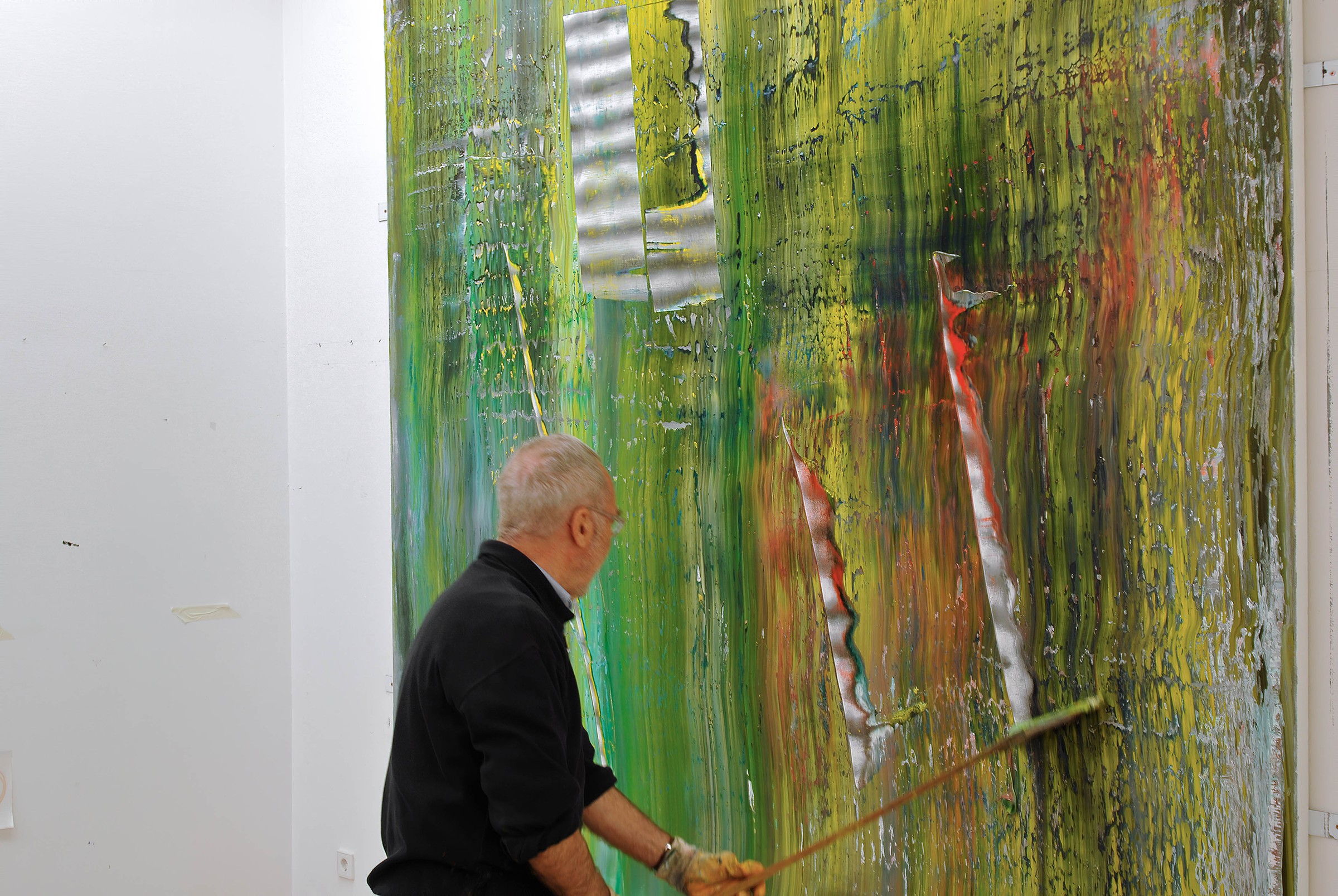
In the late 1970s, he pivoted toward abstraction, developing the squeegee paintings: layered, scraped surfaces where paint accumulated, eroded, and intermingled under pressure. These works advanced a new model of contemporary abstraction—neither gestural nor mechanical, but material and procedural, built around the friction between intention and accident.
Throughout his career, Richter interacted with—and often refused—the dominant movements of the 20th century: Socialist Realism, Pop Art, Minimalism, Conceptual Art, Photorealism, and Abstract Expressionism. His stylistic plurality is not eclecticism but inquiry. Each shift represents a different philosophical question about memory, perception, and the ontology of images.
This complexity, and his ability to reinvent form without abandoning skepticism, established Richter as one of the most consequential artists of the post-war period. His paintings command extraordinary prices, but his prints and editions represent integral components of his conceptual evolution.
II. Why Prints and Editions Matter
Richter began producing prints in 1965, with the most intense period extending to around 1974. He produced more than 100 prints during this time, using screenprint, photolithography, collotype, and offset techniques. These works frequently rework photographic sources and parallel his “photo-painting” investigations.
For Richter, printmaking was never a subordinate activity. It was a site of experimentation in reproducibility and image degradation, enabling him to probe how meaning is altered through repetition and mechanical mediation. Many prints are deliberately flat, impersonal, and anti-aesthetic, rejecting painterly depth in favour of critical neutrality.
Because Richter’s paintings routinely sell for millions, prints offer a relatively accessible entry point into his practice. More importantly, they offer conceptual access to some of the most significant artistic questions of the late 20th century.

III. Key Print Types and Series
Early Photographic Prints (1965–1974)
The earliest prints mirror themes from the photo-painting period: mechanical reproduction, uncertainty, and archival instability. Their value lies in historical position, rarity, and intellectual weight. These works demonstrate how Richter developed his critique of photography—not through theory but through form.
Contemporary Limited Editions and Multiples
Richter has intermittently returned to editions, recently in the Cage series, released through HENI Editions in 2020. Signed examples typically trade between $25,000 and $35,000 depending on condition. They offer a visually compelling and comparatively accessible way to collect works connected to his late abstractions.
Mixed-Media and Hybrid Edition Works
These encompass overpainted photographs, digital prints, or hybrid photographic objects. They are highly varied and require careful evaluation, but can provide distinctive acquisitions for collectors drawn to Richter’s interrogation of photographic media.

IV. Market Overview and Value Spectrum
Richter’s position in the market is exceptionally strong. His painting Abstraktes Bild (1986) sold for $46.3 million, setting a record for a living European artist. The strength of his painting market exerts a halo effect over prints, ensuring sustained demand.
Top-tier prints can achieve between $80,000 and $300,000+, mid-tier editions in the $25,000–70,000 range, and contemporary multiples in the $25,000–35,000 band. Posters, unsigned prints, or open editions fall below $10,000 and are generally not investment-grade.

V. Collecting Approaches and Strategies
Collectors may pursue early Richter prints for historical depth, contemporary editions for accessibility and provenance, or thematic strategies focused on photography, abstraction, and seriality. A well-curated Richter print collection can reflect the full conceptual breadth of his practice without entering the painting market.
VI. Collector Buying Checklist
A disciplined acquisition strategy is essential when collecting Richter prints, given their rarity, variability, and conceptual significance. A collector should examine each work along the following axes:
Edition size and scarcity
Small editions and rare early works are consistently most desirable. Edition size should be documented and verifiable.
Signature, numbering, and documentation
Works should ideally be signed and numbered. Provenance should include galleries, reputable publishers, or auction houses. A certificate of authenticity strengthens resale liquidity.
Technique and production quality
Screenprints, photolithographs, and collotypes carry higher value than offset reproductions or poster material. Works that replicate photographic processes should be distinguished from commercial reproductions.
Condition and conservation history
Early works often suffer from fading, discoloration, handling marks, or acidic backing. A professional condition report is advisable for high-value acquisitions.
Image quality and market familiarity
Iconic imagery tends to attract higher demand, though rarity and intellectual weight can offset unfamiliarity.
Provenance and transaction history
Works with institutional or prominent private provenance have increased desirability.
Market comparables and liquidity
Collectors should research recent sales, especially for works of similar technique, edition size, and date. Richter’s print market is narrow: scarcity and context matter.

VII. Valuation Matrix (USD)
The following matrix summarises typical price ranges based on type, edition size, and desirability:
|
Category |
Typical Price Range (USD) |
Value Drivers |
|
Early photographic prints (1965–1974) |
$80,000–300,000+ |
Historical importance, rarity, condition, provenance |
|
High-quality mid-period editions |
$25,000–70,000 |
Small editions, strong visuals, signed works |
|
Contemporary multiples (e.g., Cage) |
$25,000–35,000 |
Recent provenance, accessibility, association with major paintings |
|
Mixed-media/hybrid works |
Highly variable |
Authenticity, documentation, uniqueness |
|
Unsigned posters/open editions |
<$10,000 |
Decorative, not investment grade |
These ranges reflect the current market climate but are subject to volatility driven by supply, visibility, and macroeconomic conditions.
VIII. Why Collect Richter Prints
Gerhardt Richter prints grant access to a body of work that is formally adventurous, philosophically rigorous, and historically foundational. They reflect the evolution of his thinking on memory, representation, and the instability of perception. They offer intellectually credible collecting options below the multi-million dollar painting market while retaining cultural value.
IX. Conclusion
Gerhard Richter’s prints and editions occupy a vital position within his practice. They are not reproductions but investigations into the very nature of images, truth, and memory. For collectors, they offer an opportunity to engage with one of the most significant artists of the post-war period through works that balance conceptual sophistication, historical importance, and market stability. A thoughtful, well-researched collection of Richter prints becomes not merely an investment but an archive of one of the most influential visual languages of the contemporary era.
Discover Gerhard Richter prints for sale and contact our galleries via info@guyhepner.com for latest availability.
