Damien Hirst’s ascent to global prominence is inseparable from the cultural, economic, and artistic shifts that reshaped the contemporary art world at the end of the twentieth century. Born in Bristol in 1965 and raised in Leeds by his mother after his parents’ separation, Hirst’s early life was marked by both instability and an acute awareness of authority, discipline, and transgression. As a teenager, he developed an interest in drawing and art while also encountering the realities of institutional systems, experiences that would later inform his fascination with control, order, and the structures that govern human behaviour. These formative years coincided with a Britain undergoing profound social change, as the post-war consensus gave way to Thatcher-era individualism, a climate that would prove fertile ground for a generation of artists willing to challenge established norms.
Hirst enrolled at Goldsmiths College in London in 1986, an institution that was redefining the parameters of art education by prioritising ideas over traditional technical training. At Goldsmiths, Hirst absorbed the legacies of conceptual art and minimalism, drawing particular inspiration from Marcel Duchamp’s readymades, Carl Andre’s industrial forms, and Donald Judd’s serial structures. Equally influential was Andy Warhol, whose embrace of repetition, delegation, and the merging of art with commerce provided a crucial precedent for Hirst’s own practice. Rather than viewing the market as external to art, Hirst would come to see it as an extension of the artwork’s meaning.
While still a student, Hirst organised the exhibition Freeze in 1988 in a disused London docklands building, bringing together a group of young artists who would later be known as the Young British Artists. The exhibition was not only an artistic statement but also an act of self-mythologising, signalling a new generation that rejected the hierarchy of traditional galleries and institutions. Freeze caught the attention of advertising magnate and collector Charles Saatchi, whose patronage would prove decisive in launching Hirst’s career. Saatchi’s support enabled Hirst to realise ambitious works that would have been impossible without substantial financial backing, most notably his preserved-animal installations.

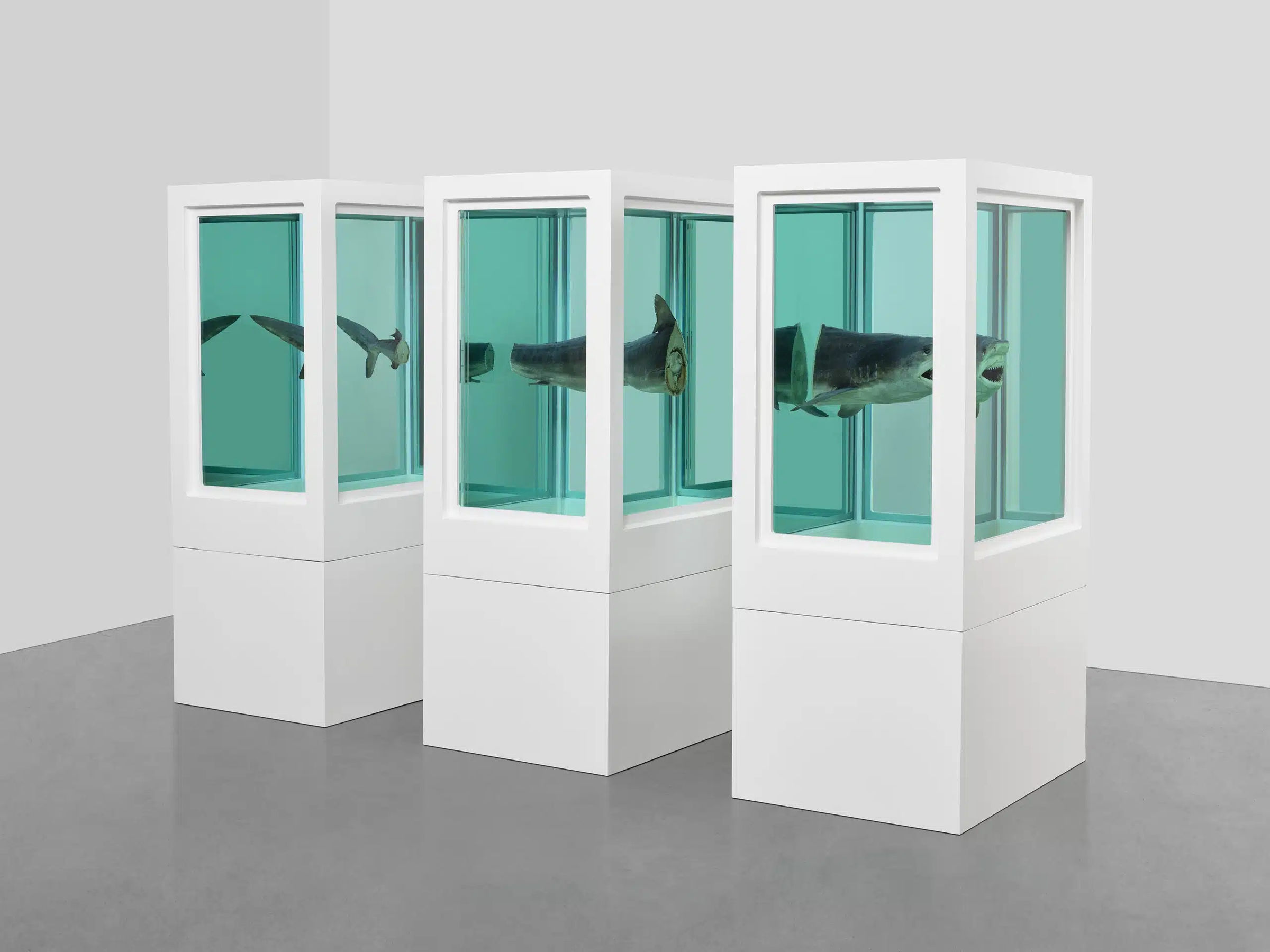
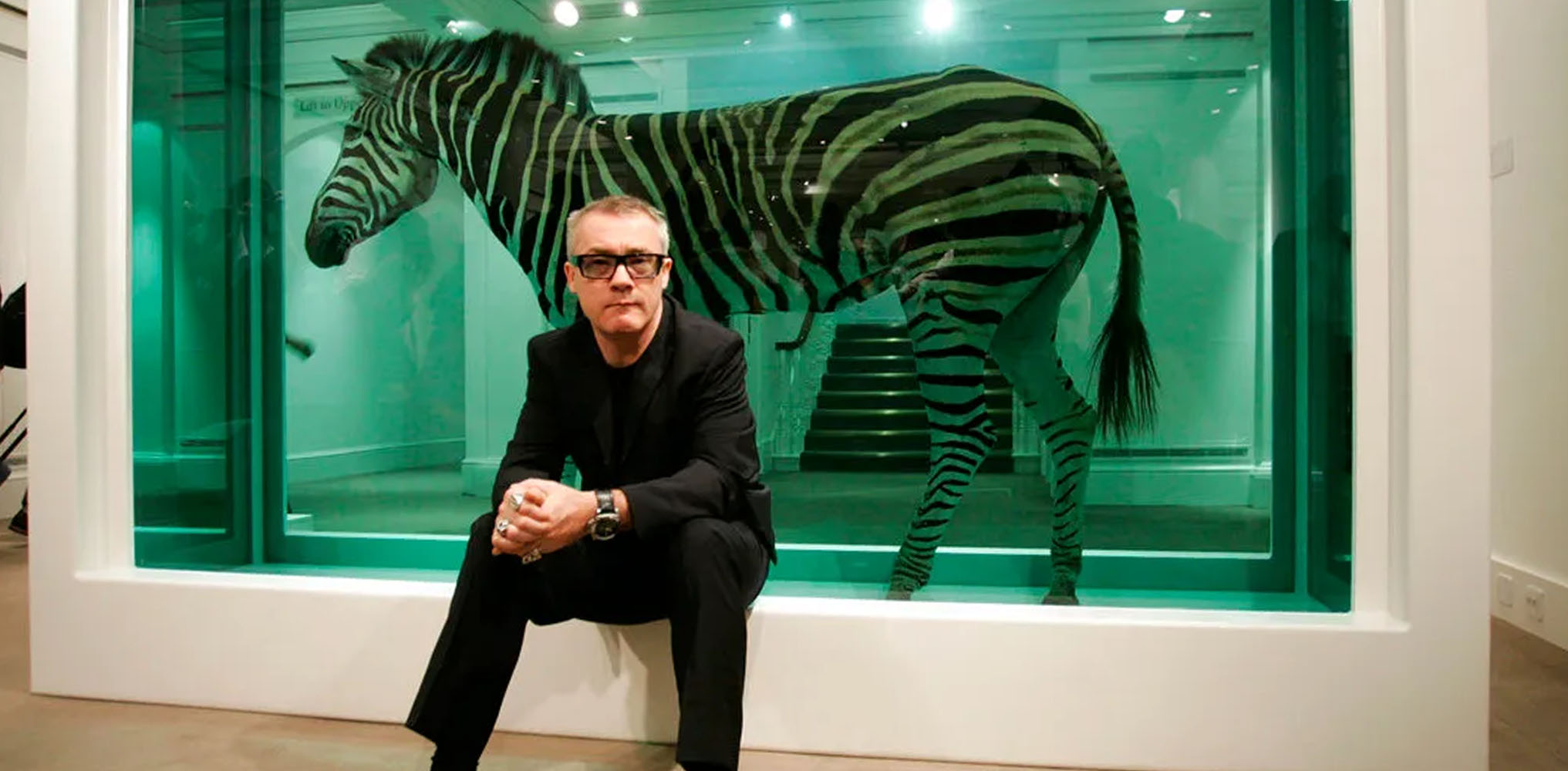
From the early 1990s onward, Hirst’s practice became synonymous with a direct confrontation with death. Works such as The Physical Impossibility of Death in the Mind of Someone Living presented mortality not as an abstract concept but as a physical presence. By placing animals in tanks of formaldehyde, Hirst borrowed the visual language of natural history museums and scientific laboratories, environments designed to classify, preserve, and neutralise fear. The shock of these works lay not only in their subject matter but in their clinical presentation, which denied viewers the emotional distance typically afforded by art. This approach established Hirst as both a provocateur and a serious conceptual artist, capable of generating widespread public debate.
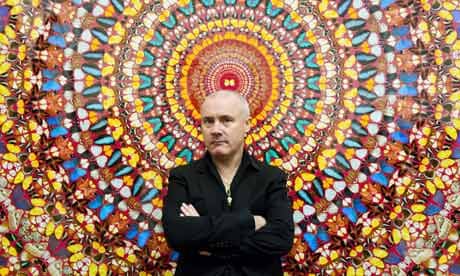
Hirst’s engagement with religion, belief, and medicine expanded throughout the 1990s and early 2000s. Cabinet works filled with surgical instruments, pharmaceutical packaging, and pills reflected a growing interest in how modern society replaces traditional religious faith with trust in science and pharmaceuticals. These works drew on minimalist aesthetics while retaining strong symbolic content, positioning Hirst within a broader art historical dialogue while maintaining mass appeal. At the same time, paintings such as the spot and butterfly series demonstrated his interest in systems, repetition, and colour, further blurring the boundaries between painting, sculpture, and installation.

By the early 2000s, Hirst had become one of the most recognisable artists in the world, his name synonymous with both contemporary art and its increasing commercialisation. Major museum exhibitions and international gallery representation solidified his institutional standing, while record-breaking auction results elevated his market profile. Hirst’s popularity extended beyond the art world into popular culture, where his works became symbols of excess, ambition, and the spectacle of contemporary capitalism. This dual visibility, both critical and commercial, made him a lightning rod for debate. Admirers praised his willingness to confront uncomfortable truths and to expose the mechanisms of belief and value, while critics accused him of cynicism and overproduction.
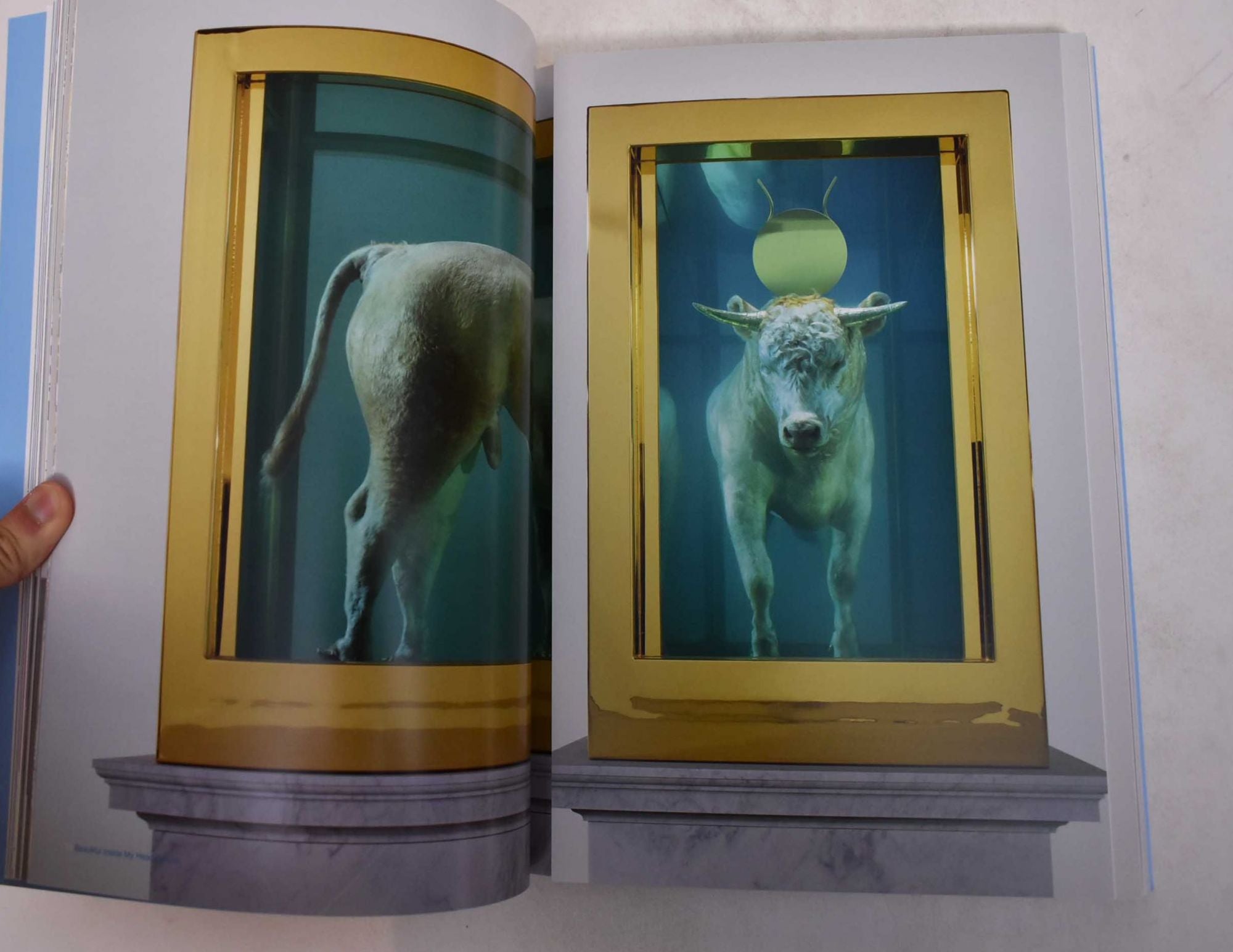
A pivotal moment in Hirst’s career came in 2008 with Beautiful Inside My Head Forever, a two-day auction at Sotheby’s in which he bypassed galleries and sold directly to the market. Generating over $200 million in sales, the auction coincided with the onset of the global financial crisis and underscored Hirst’s unique position as an artist who could command unprecedented attention and capital. While the years that followed saw a period of market correction and reassessment, Hirst’s most important works retained their status, supported by institutional collections and long-term collectors.
In recent years, Hirst has undertaken a deliberate process of recontextualisation, returning to painting and emphasising art historical continuity. Large-scale series such as the Cherry Blossoms and Veil Paintings have been exhibited internationally, signalling a renewed engagement with gesture, colour, and the history of painting. This evolution has helped reposition Hirst not simply as a provocateur of the 1990s, but as an artist engaged in a sustained dialogue with the past.
Historically, Damien Hirst’s significance lies in his ability to synthesise conceptual rigor, visual immediacy, and market awareness into a single practice. His popularity has never been accidental; it has been built through a combination of intellectual ambition, strategic self-presentation, and an acute understanding of how art circulates in the modern world. The most expensive works in his oeuvre are therefore not isolated anomalies, but the culmination of a career that has consistently tested the boundaries of art, belief, and value.
For the Love of God, 2007 — Private Sale Consortium, London, 2007 — Approx. $100 million
For the Love of God stands as the most expensive and symbolically loaded work Damien Hirst has ever produced. The platinum skull encrusted with 8,601 diamonds was unveiled in London in 2007 and was reportedly sold shortly thereafter to a consortium of investors that included the artist himself, at a valuation of approximately $100 million. While the precise ownership structure has been widely debated, the valuation alone permanently altered perceptions of what a living contemporary artist’s work could be worth. The work’s fusion of mortality and extreme luxury made it both a memento mori and a critique of excess, situating it at the absolute apex of Hirst’s market.

The Physical Impossibility of Death in the Mind of Someone Living, 1991 — Private Sale to Steven A. Cohen, 2004 — Estimated $8–12 million
Created in 1991 and originally funded by Charles Saatchi, this iconic tiger shark suspended in formaldehyde is the work that defined Hirst’s early career. In 2004, it was reportedly sold in a private transaction to hedge fund manager Steven A. Cohen for an estimated $8 to $12 million. Although later works surpassed it financially, this piece remains Hirst’s most historically significant artwork. Its value derives from its role as a cornerstone of the YBA movement and as one of the most recognisable images in contemporary art history.

Lullaby Spring, 2002 — Sotheby’s London, 2007 — $19.3 million
Lullaby Spring achieved its price at Sotheby’s London in June 2007, when it sold for approximately $19.3 million, setting a new auction record for Hirst at the time. The work consists of a steel and glass cabinet filled with 6,136 hand-painted pills arranged in a chromatic grid. Its success marked a shift in Hirst’s market away from shock-driven installations toward works that combined conceptual strength with formal elegance. Collectors responded to its minimalist beauty and its meditation on medicine as a modern belief system.

Lullaby Winter, 2002 — Private Sale, Late 2000s — Estimated $15–20 million
Another major work from the Lullaby series, Lullaby Winter has changed hands privately for an estimated sum in the region of $15 to $20 million. Like Lullaby Spring, it belongs to the most sought-after category of Hirst’s cabinet works, appealing to institutional collectors due to its scale, visual restraint, and conceptual clarity. The consistency of pricing across the Lullaby series reflects sustained demand for museum-quality pharmaceutical works.

Mother and Child (Divided), 1993 — Private Sale, Mid-2000s — Estimated $10–12 million
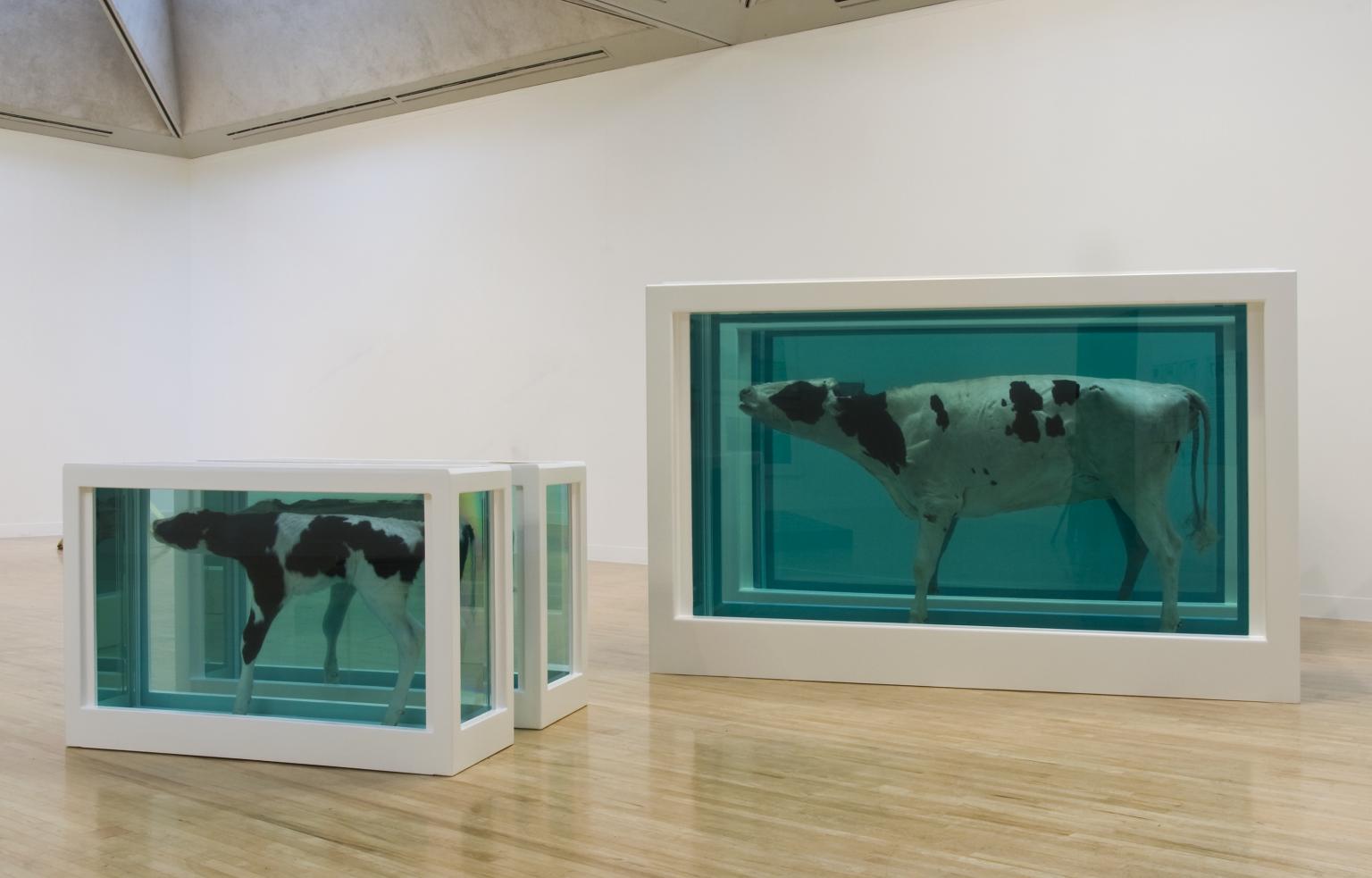
Winner of the Turner Prize in 1995, Mother and Child (Divided) is one of Hirst’s most emotionally powerful formaldehyde installations. The bisected cow and calf displayed in four vitrines reportedly sold in a private transaction in the mid-2000s for over $10 million. The work’s importance lies in its ability to transform scientific display into a deeply unsettling emotional experience, while its Turner Prize association significantly enhances its market value.
Butterfly Painting (Monumental Kaleidoscope Works), c. 2002–2008 — Private Sales and Auctions — $10–15 million range
Large-scale butterfly paintings constructed from real butterfly wings arranged in symmetrical compositions have achieved prices well into eight figures. Several examples from the early 2000s have sold privately and at auction for between $10 and $15 million. These works are prized for their jewel-like beauty and their quieter but no less potent engagement with mortality and transformation. They occupy a crucial position in the top tier of Hirst’s painting market.
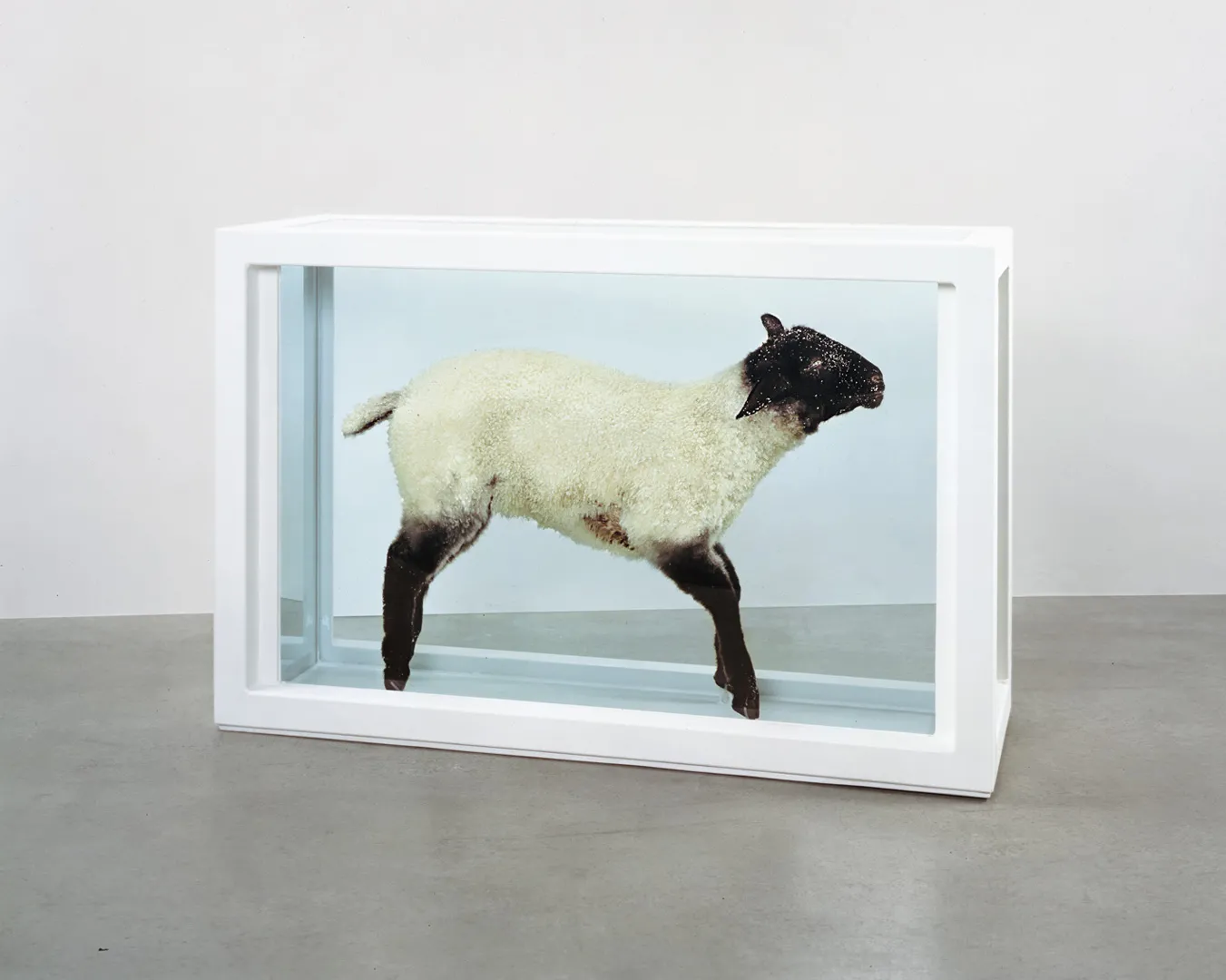
Away from the Flock, 1994 — Sotheby’s London, 2007 — $10.9 million
Away from the Flock, featuring a lamb preserved in formaldehyde, sold at Sotheby’s London in 2007 for approximately $10.9 million. Despite its relatively modest scale compared to the shark or cow installations, the work’s emotional and symbolic resonance has made it one of Hirst’s most valuable animal pieces. Its religious undertones and sense of isolation have contributed to its lasting appeal among collectors.
Saint Sebastian, Exquisite Pain, 2007 — Sotheby’s London, 2008 — $11 million
From the Exquisite Pain series, Saint Sebastian sold at Sotheby’s London in 2008 for around $11 million. The work reinterprets the Christian martyrdom of Saint Sebastian through Hirst’s signature blend of beauty, suffering, and spectacle. It reflects his ongoing engagement with religious iconography and reinforces the importance of belief and sacrifice within his broader conceptual framework.
.jpg)
Taken together, these ten artworks define the summit of Damien Hirst’s market. They are united not simply by price, but by their ability to crystallise the central concerns of his practice at key moments in his career. From early confrontations with death to later meditations on belief, medicine, and luxury, these works demonstrate why Hirst remains one of the most commercially and culturally significant artists of the contemporary era.
Disover signed Damien Hirst prints for sale and contact our New York and London galleries via info@guyhepner.com for current availabilities.
